July 20, 2026
What Is a Cyborg CEO? Why I Lead with AI, and You Should Too
Darren Goonawardana explains the Cyborg CEO operating model: using AI and automation to amplify executive judgment, not replace it, so leaders can run companies that scale without consuming them.
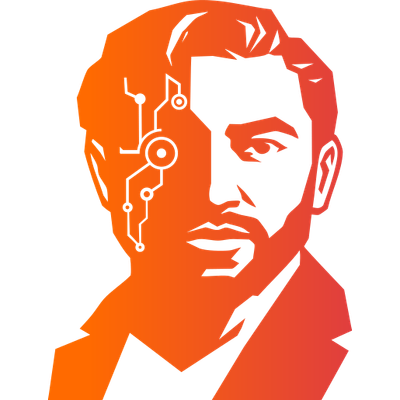
People hear “Cyborg CEO” and picture science fiction. The reality is much less dramatic and much more useful. A Cyborg CEO is a leader who pairs human judgment with machine leverage, deliberately and systematically, across every part of the business. Not AI instead of the executive. AI wired into how the executive thinks, decides, and operates.
I did not arrive at this idea from a keynote stage. I arrived at it from 30 years of building technology companies across four continents, and from watching brilliant founders become the bottleneck in their own businesses. The pattern is always the same: the company grows, the decisions multiply, and the leader responds by working longer hours and micromanaging harder. Eventually the business owns them instead of the other way around.
The promise every technology wave broke
I have spent my whole career in data. Business intelligence in the nineties, enterprise planning and analytics through the two decades after that, and now AI at Collectiv, the data and AI consultancy I co-founded. Every wave made the same promise: better information, faster decisions, less grunt work. Every wave under-delivered, because the technology still needed humans to carry the load between systems. Someone had to pull the report, reconcile the spreadsheet, chase the update, write the summary.
This wave is different, and I say that as someone who has been professionally sceptical about hype for three decades. Modern AI does not just present information for a human to process. It processes. It drafts, reconciles, monitors, and acts. For the first time, the connective tissue of a business, all that invisible work between decisions, can genuinely be delegated to machines.
What I actually changed
At Collectiv I got tired of paying outside agencies and juggling disconnected tools for our own marketing. So we built an AI-powered system that creates content, attracts leads, and moves deals forward with minimal human touch. The results were not subtle: form fills doubled at a fraction of the previous cost. That system is now something I teach other entrepreneurs to build, most recently with EO Chicago.
But the marketing engine is just one example of the operating model. The Cyborg CEO approach rests on three principles.
The three principles
Automate the repeatable, ruthlessly. If a task follows a pattern, a machine should do it. Reporting, follow-ups, content drafts, data reconciliation, meeting summaries. Every hour a leader spends on repeatable work is an hour taken from the work only they can do.
Instrument every decision with data. Gut feel matters, but gut feel with live data beats gut feel alone every single time. Your planning, your forecasting, and your pipeline should sit on one governed data foundation, not in seventeen spreadsheets that disagree with each other. This is where most companies quietly bleed. It is also where my consulting work lives, on the Microsoft and Databricks platforms, because the foundation determines everything built on top of it.
Keep humans on judgment. AI is not a replacement for human intelligence. It is a tool that amplifies leadership capability. Strategy, taste, relationships, hard calls with incomplete information: that is the executive’s job, and it always will be. The point of automating everything else is to give those decisions the time and attention they deserve.
What this is not
The Cyborg CEO model is not a headcount story, and it is not a shortcut for leaders who want to stop thinking. If you automate a broken process, you get broken outcomes faster. If you delegate your judgment to a model, you are not a Cyborg CEO, you are a passenger. The leaders who win with AI are the ones who stay deeply engaged with the decisions that matter and get everything else off their desk.
The freedom test
Here is the measure I use. Your business should give you freedom, balance, and impact. If it consumes you instead, something in the operating model is wrong, and in 2026 the fix is almost always the same: you are still doing work that machines should be doing.
That is what leading with AI means to me. Not replacing people. Not chasing every shiny tool. Building a business where machines carry the repeatable load, data informs every call, and the humans, starting with you, do the work only humans can do.
The executives who master this will not be replaced by AI. They will be amplified by it. That is the whole idea, and it fits in one sentence: lead with AI, so you can lead at all.
By Darren Goonawardana. About the author.